Why Qualcomm Acquires Arduino
 admin
admin
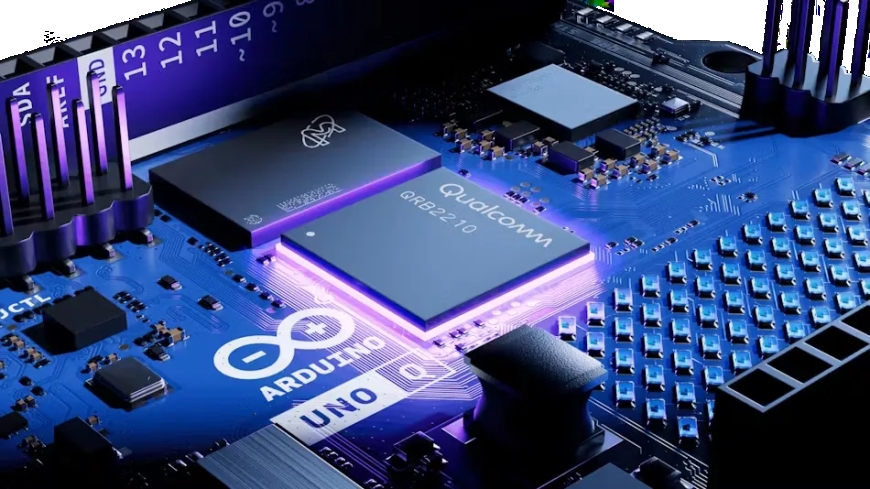
Qualcomm's announcement of the acquisition of Arduino, the world's most influential open-source hardware company, has sparked widespread attention in the technology community.
Why is this? We can think about it, of course, it is definitely related to the considerations of the future Internet of Things (IoT) and edge AI era. Qualcomm lacks penetration in the developer ecosystem, especially in the fragmented IoT field.
Acquiring Arduino is not so much about valuing its hardware as it is about buying the world's largest and most active hardware developer community, with an ecosystem of millions of users. It is Qualcomm's lowest cost and most efficient "pipeline" for sinking its SoC (System on Chip) and edge AI technology into massive innovation projects.
For Arduino, it also needs to break free from the performance bottleneck of traditional MCUs and obtain the "ticket" to enter the high-performance AIoT field. Qualcomm's chip technology and capital are the key fuel for it to complete this evolution.
Qualcomm can make Arduino the "official beginner's village" and de facto reference design platform for its IoT chips, lowering the development threshold and ultimately paving the way in the AI+IoT field. Arduino can transform from a "maker enlightenment tool" to a "professional AIoT development platform", enhancing its value in industrial and commercial applications.
The story of Arduino began in 2005 in a laboratory at the Ivrea Design Institute in Italy. Several students and their mentor Massimo Banzi developed a simple development board based on the ATmega8 chip to solve the problem of teaching interaction design tools.
Of course, with low cost, open-source code, and open documentation, the board quickly evolved from a teaching aid tool to one of the most influential open-source hardware platforms in the world.
The success of Arduino is due to its ability to lower the threshold for "creation", and its core contribution lies in:
Bringing hardware from the exclusive domain of engineers into the hands of ordinary makers and students;
Provide a complete set of integrated software and hardware development experience, from IDE to library, and then to onboard firmware;
◎ The right to free reproduction and re creation is protected by GPL, LGPL, CC BY-SA and other agreements.
The completely open attitude has made Arduino the "first board" for countless people to experience embedded development. The annual sales of Arduino development boards exceed 10 million, with over 30 million active users and more than 100000 related open source projects, symbolizing that "anyone can implement their ideas hands-on".
Of course, the open-source ecosystem is not flawless. With the rise of the Internet of Things, AIoT, and smart hardware, Arduino is facing issues of insufficient performance and fragmentation.
Classic products such as UNO and Nano still rely on 8-bit MCUs as their core, which is outdated compared to mainstream multi-core and AI acceleration architectures today.
Although Arduino has attempted to release new versions such as UNO R4, its performance and ecological appeal are no longer as attractive as before. The maker education market is gradually becoming saturated, and Arduino's growth momentum is slowing down.
How to maintain influence has become an unavoidable issue for the company. In this context, Qualcomm's acquisition is clearly not a "sudden idea", but a recombination of the technology ecosystem.
Qualcomm has seen that Arduino has a maker and developer ecosystem, and with a strong patent pool and communication standard discourse power, Qualcomm has dominated the era of smartphones.
But as the mobile phone market becomes saturated, the growth space is shifting to the Internet of Things, edge AI, and embedded intelligent systems. These emerging fields are highly fragmented: with diverse device forms, complex software ecosystems, and varying application requirements.
The traditional chip+SDK model is difficult to rapidly expand. Arduino has a natural advantage in "rapid prototyping" and "developer community". The acquisition can be seen as an accelerator for Qualcomm's IoT strategy.
Qualcomm's logic is very clear: expanding ecological boundaries, unifying development interfaces, and enhancing soft power.
By leveraging the community foundation of Arduino, we can more naturally embed our own chips into the education, maker, and lightweight AIoT markets;
Integrate Python, RTOS, and Linux environments through Arduino App Lab to lower development barriers and allow more non professional developers to access Qualcomm platforms;
◎ In the competition of AI edge computing, the gap in ecological level is opened with NVIDIA, MediaTek, Lexin and other manufacturers.
In the past, Arduino was limited by the performance of 8-bit and 32-bit MCUs, but now it can be integrated with Qualcomm's powerful CPU, GPU, and AI acceleration capabilities. The emergence of UNO Q has also brought Arduino back to the center of discussion on performance and innovation.
When an open source project is acquired by a commercial giant, the question to consider is whether freedom will be weakened?
The reason why Arduino has been thriving for a long time is precisely because it does not treat developers as "users", but as "co builders". However, Qualcomm's corporate culture is completely different - it is known for patent licensing and ecological isolation, and was even referred to as a "patent rogue" in the industry at one point.
Both sides emphasized in their statements that Arduino will maintain its independent brand and open source mission, but historical experience tells us that commercial integration often leads to ecological convergence.
When product updates are deeply integrated with Qualcomm chips, will they continue to support chips from other manufacturers such as Lexin, ST, or Microchip?
As the underlying layers of IDEs, libraries, and drivers gradually rely on Qualcomm SDKs, can the community still freely replicate or modify them?
The answers to these questions will determine whether Arduino will continue to be the "banner of open source hardware" or become one of the entry points into the Qualcomm ecosystem in the future.
Qualcomm is indeed changing. From launching the "Yuelong Platform" to participating in the RISC-V Alliance, it is gradually transitioning towards openness.
Acquiring companies such as Arduino, Edge Impulse, and Foundries. io can be seen as an attempt to build an open development ecosystem.
Arduino can achieve technological leaps with the help of Qualcomm's resources, while Qualcomm wins the trust of developers through an open source ecosystem, achieving "two-way empowerment".
UNO Q's market feedback will become a barometer: if it can truly lower the threshold and maintain open source compatibility in education and AIoT development, then this acquisition will be seen as a "win-win" situation.